Amy Ellingson Solo Exhibition “Plastic Hour"
Nov 27 — Dec 25, 2026
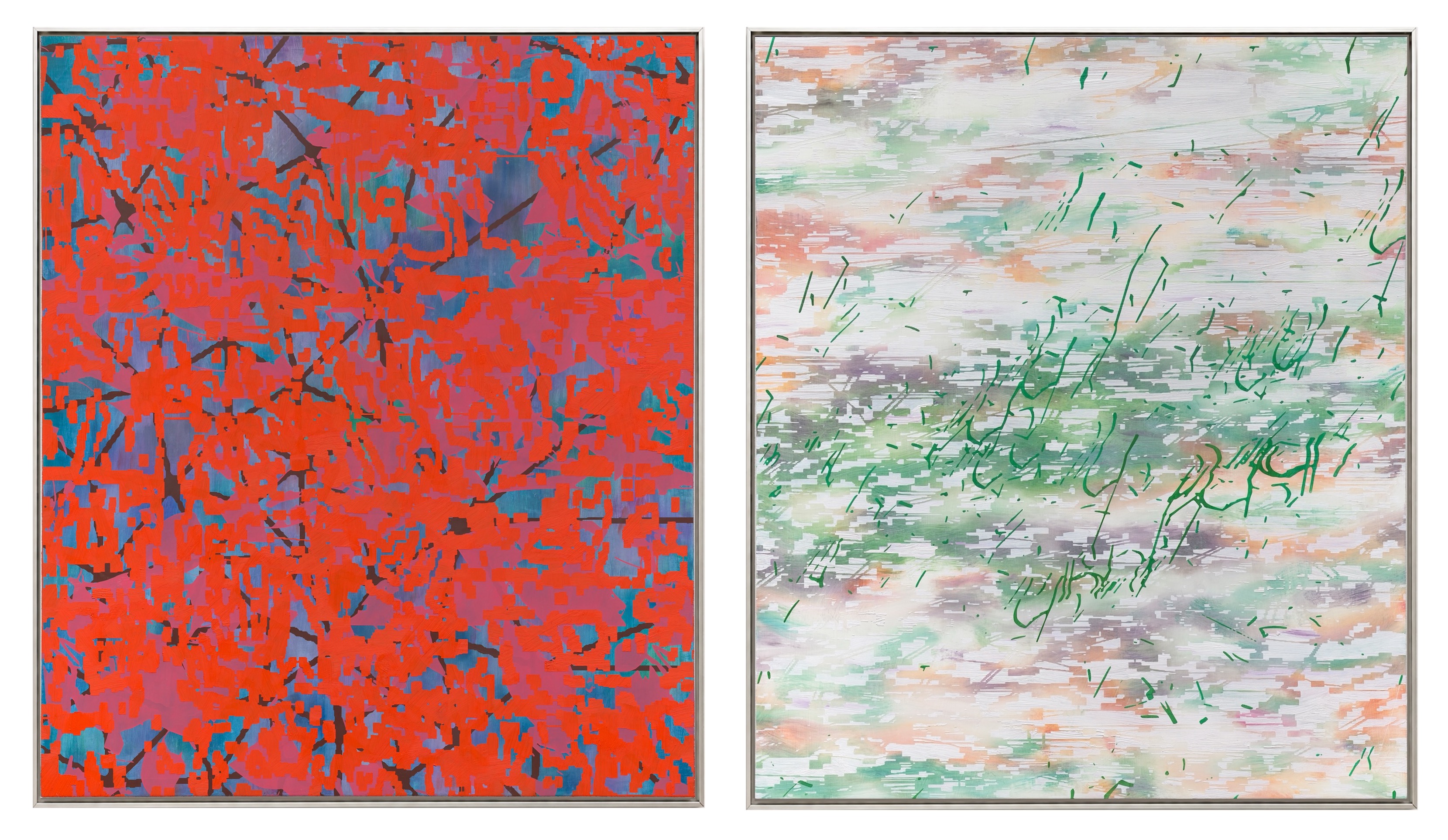
Sho+1 is pleased to present “Plastic Hour,” a solo exhibition by Amy Ellingson, on view from Friday, November 27 through Friday, December 25, 2026. Ellingson was born in the San Francisco Bay Area, California, and is currently based in Santa Fe, New Mexico. She is an artist who can be described as a contemporary Neo-Plasticist, translating digital code into physical forms across painting, sculpture, and craft. Alongside her studio practice, she has also established a distinguished career as a leading art educator over many years. In conjunction with this exhibition, the artist will be visiting Japan. An opening reception will be held on the evening prior to the opening, on Thursday, November 26 at 18:00. We look forward to welcoming you to the gallery. ◾️Artist Statement My work addresses the intersection of contemporary digital experience and the historical language of abstraction. I am fascinated by fluctuating states of technology and craft—whether established, evolving, or evanescent. For more than three decades I have identified primarily as a painter, combining traditional painting methodologies with computer-generated imagery and translating digital structures into substantive, material objects. Using repetition and variation within a language of pure abstraction, I use the computer to appropriate and repurpose elements of my own work. Digital imagery and data files associated with the painting process—primarily raster and vector files—are translated into a range of mediums, including paintings, drawings, bronze and glazed porcelain sculptures, robotic drawings, hand-drawn graphite works, and Jacquard tapestries. These varied forms convey the same underlying informational “code,” appearing through different degrees of digital and material mediation. Together they explore the multiplicity of expressive possibilities within a limited formal system. The exhibition title Plastic Hour refers to a moment when structures become malleable—when existing systems loosen and new forms become possible. The phrase echoes the concept of “plastic art” articulated by Piet Mondrian, who understood abstraction as a means of clarifying equilibrium through the balance of unequal but equivalent oppositions. We are living through a period of profound instability: technological acceleration, political upheaval, and the rapid transformation of cultural systems. I often think about this moment through an astronomical metaphor—the era following the Late Heavy Bombardment, when planetary surfaces were repeatedly struck and reshaped before gradually stabilizing. The works in this exhibition reflect that condition. While continuing to engage the systemic logic that has long informed my work, these paintings introduce greater openness and spatial clarity, allowing relationships between forms to emerge with increased precision. In these works, equilibrium is privileged over informational density. For Mondrian, plastic art revealed that although human circumstance unfolds within continual disequilibrium, it is nevertheless grounded in the possibility of balance. I continue to believe that abstraction can offer opportunities for reorientation—instances in which form, perception, and attention align, returning us to our innate perceptivity and our embodied position within the world. [Gallery Note: Piet Mondrian and "Plastic Art"] Piet Mondrian (1872–1944), the Dutch painter renowned for his compositions of red, blue, and yellow lines, termed his approach to abstraction "Plastic Art" (Neo-Plasticism). Here, "plastic" does not refer to synthetic resin, but rather to the quality of malleability—the capacity to transform and create new harmony. Mondrian believed that even within a world filled with disequilibrium and turmoil, a "beautiful equilibrium" could be achieved through the opposition and harmony of forms. His philosophy—that even within a world filled with disequilibrium and turmoil, a "beautiful equilibrium" can be achieved through the opposition and harmony of forms—serves as a vital backbone for both Ellingson's artwork and her conceptual framework as she navigates today's digital society and era of uncertainty. ◾️Artist Profile Born in the San Francisco Bay Area, California, Amy Ellingson holds a B.A. from Scripps College and an M.F.A. from CalArts. Alongside her studio practice, she has built a distinguished career as a leading art educator over many years, including serving as Associate Professor at the San Francisco Art Institute (SFAI). Based in Santa Fe, New Mexico since 2018, she can be described as a contemporary Neo-Plasticist who translates digital code into physical forms across painting, sculpture, and textiles. Known for major public commissions—including large-scale installations at San Francisco International Airport (SFO) and San Diego International Airport—her work is represented in prominent public collections, such as the San Francisco Museum of Modern Art (SFMOMA). She has also contributed to Hyperallergic, writing about exhibitions in the Santa Fe area, and her book On Painting and the Nature of Work was published by N+Co. in July 2026. ◾️Artist Page(including past exhibitions) https://shoplusone.com/en/gallery-top-en/artists-en/amy-ellingson-en/ Amy Ellingson Instagram:@amyellingsonartist Website:www.amyellingson.com ◾️Overview Amy Ellingson Solo Exhibition “Plastic Hour" Date|27 November (Fri) to 25 December (Fri), 2026 Time|12:00 - 18:00 / Closed on Sundays, Mondays and Public Holidays at Sho+1 Opening Reception November 26 (Thu) 6pm – 8pm The artist will attend the reception. Please feel free to join us.